Quality in a coastal villa comes not from expensive surfaces, but from the right meeting of light, shade and material. That discipline binds the house to time, not only to the view.
On a coastal site, architecture begins by carrying the view rather than merely capturing it. Changing light, salt air, humidity and strong wind turn material choice from a stylistic preference into a structural decision. At Pera Villas., our first question on coastal villas is not “how will it look?” but “how will it live in ten years?”
A villa’s success on the coast is not measured in a single hero photograph, but in how the living room receives early light, whether the terrace remains usable in the afternoon, and how winter wind enters the house. Light and material must therefore be thought in the same sentence.
Eaves, thresholds and shade discipline
Every coastal villa starts with sun angles, eave depths and indoor–outdoor thresholds. A deep eave is not only a silhouette; it is a climate tool that cools interiors, protects glass and keeps outdoor living usable. A poorly calculated eave can overheat the house in summer, while an overly deep eave can cut the winter light we still need.
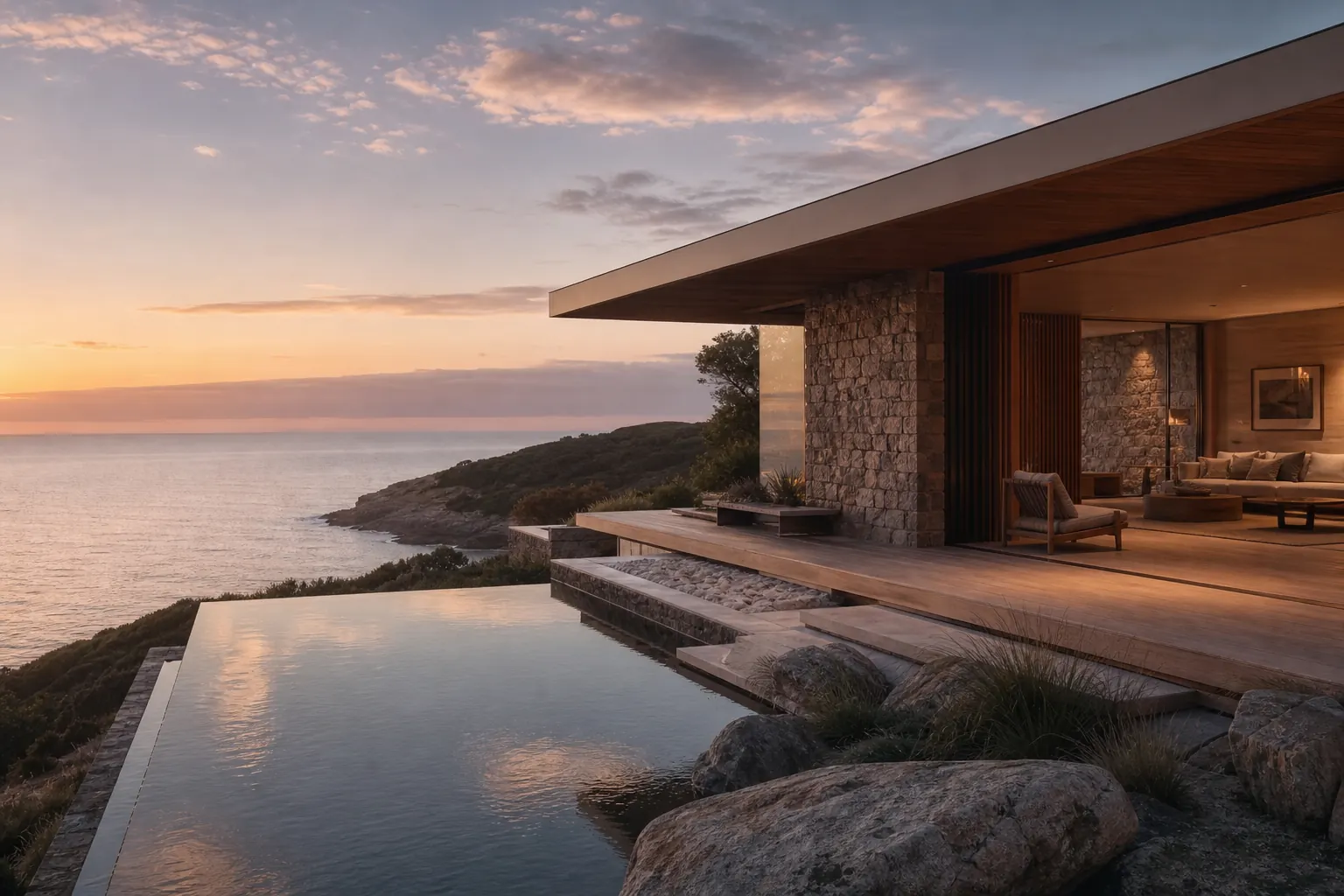
Thresholds ask for the same care. Level change, detail and surface continuity between interior and terrace shape daily life. Seemingly small topics — shoe transition, rainwater, wind shelter and privacy — are in fact the main decisions that make a villa livable.
Salt, humidity and surfaces that age
Stone, timber and mineral plaster are not only visible surfaces. Together they determine how the building will age, what maintenance rhythm it will ask for, and at which hours the rooms will be most usable. On the coast, glossy high-maintenance finishes tire quickly; well-chosen matte and textured materials gain character with time.
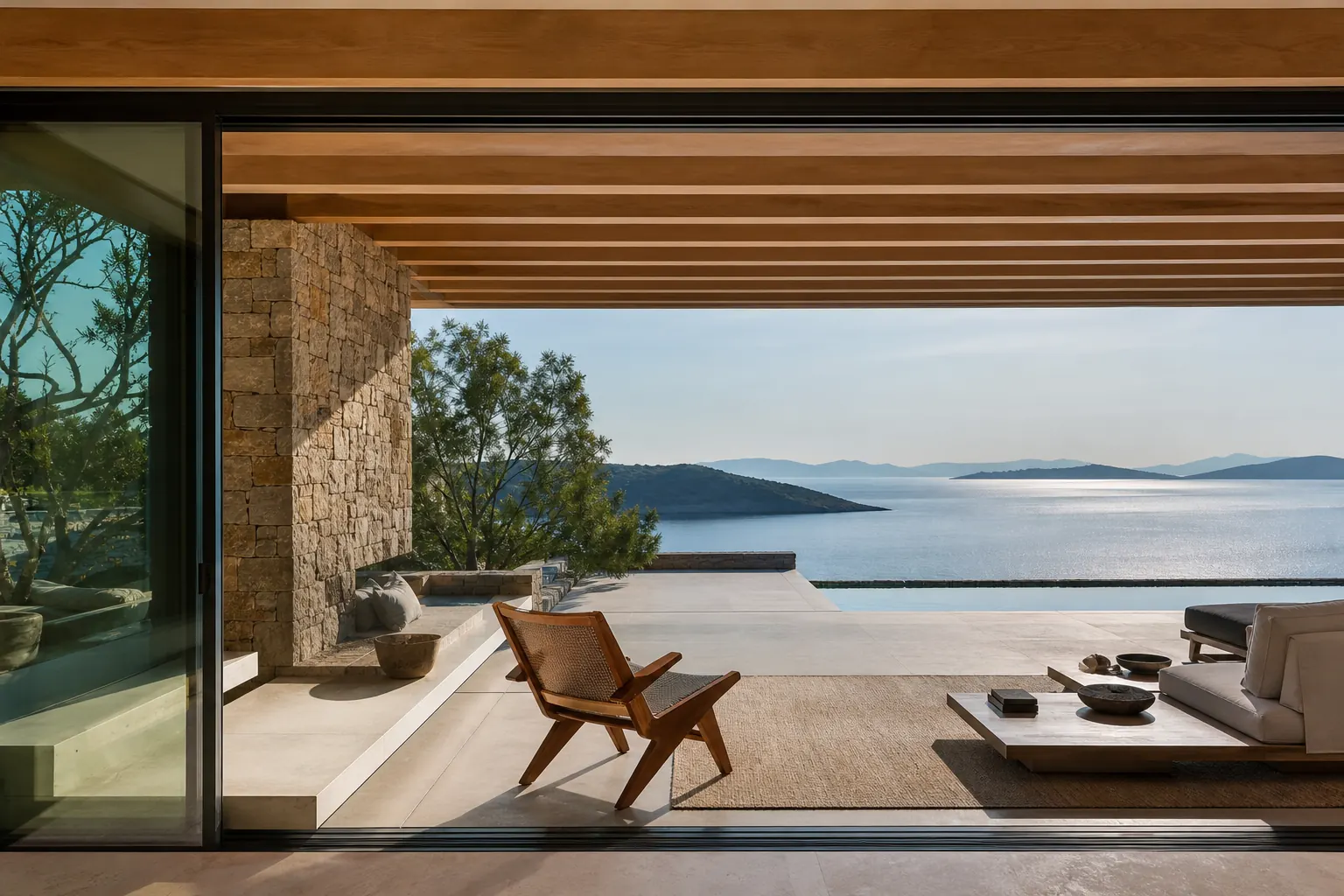
- Plan organisation by sun and wind
- Material palette resistant to salt and humidity
- Details that remain maintainable over time
- Thresholds that keep the view without losing privacy
- Corrosion control at glass, metal and timber junctions
- Terrace and eave balance for summer and winter use
How light is distributed through the house
On a coastal villa, the west facade is often the most desired and the hardest to manage. Evening light is beautiful, but without control living rooms and bedrooms overheat. Instead of spreading openings evenly, we grade them by use: shared spaces get controlled wide glass; service and private rooms stay more protected.
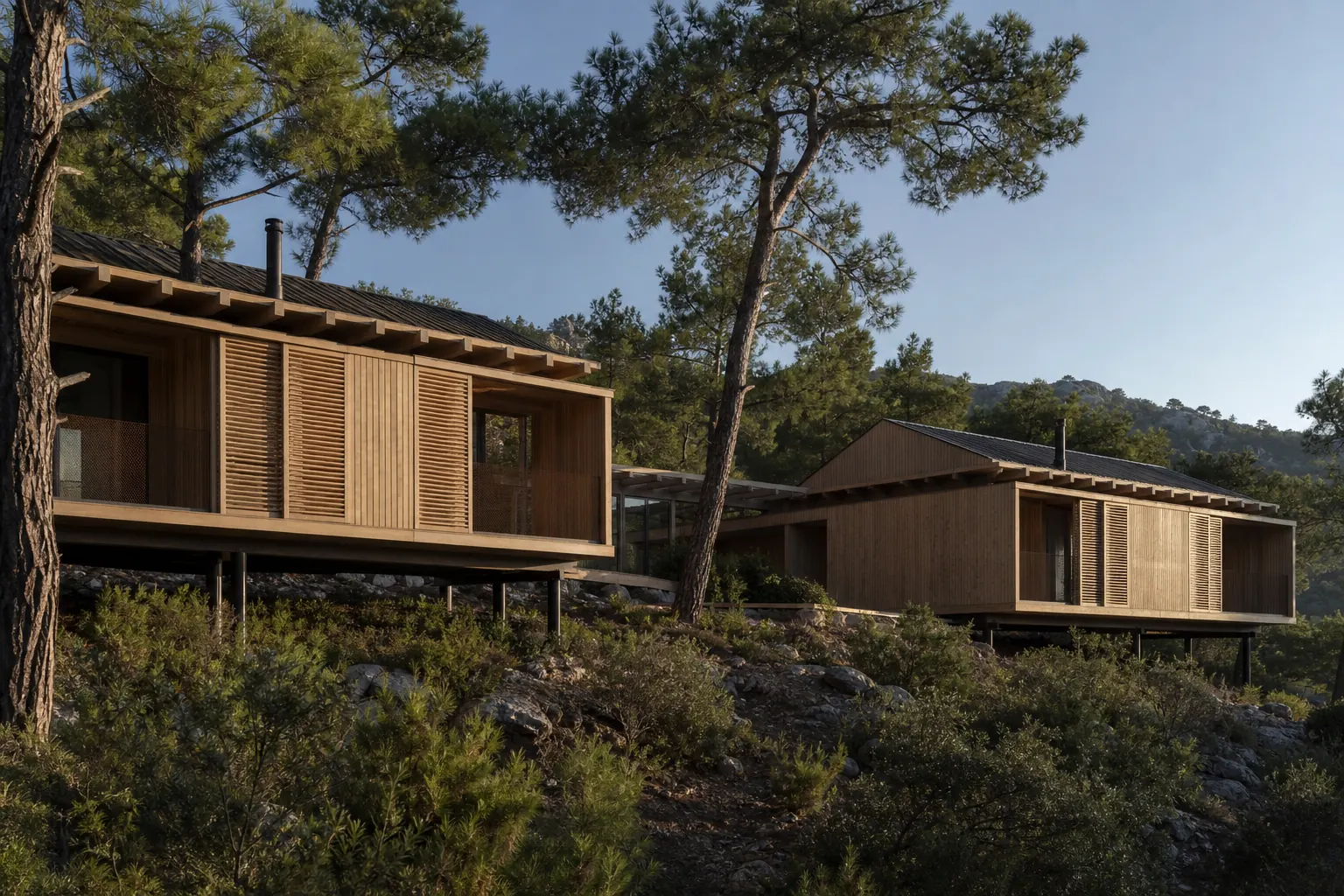
The right detail appears not in the first photograph, but in a house that still feels calm five years later.
In the end, coastal architecture is not a showcase exercise. When light, shade, material and maintenance discipline come together, the villa stops “owning” the view and starts living with it. That is the quality Pera Villas. seeks in every coastal project.