BKS is a tracking and registration system that gives a building a unique digital identity. The plate does not mean perfection; it means the building is registered and traceable.
The Building Identity System (BKS) was created by Türkiye’s Ministry of Environment, Urbanisation and Climate Change to give each building a unique digital identity for tracking and registration. The system entered practice in 2021. Its aim is to gather critical building information under one identity, ease inspection, and give emergency teams faster data in a disaster.
What citizens usually see day to day is the metal plate on the facade. But BKS is not only a plate; behind it sits a digital backbone linking permits, inspection, laboratory and project records. At Pera Villas., on inspected completed projects, we treat that record discipline as part of quality.
What is on the plate?
The metal plate fixed to a visible facade typically includes a QR code, an RFID chip and a unique building identity number. The Ministry defines this plate as the Building Identity Certificate. QR gives smartphone access to publicly available information. RFID can allow authorised readers to access data without direct contact, especially useful in disaster or emergency conditions.
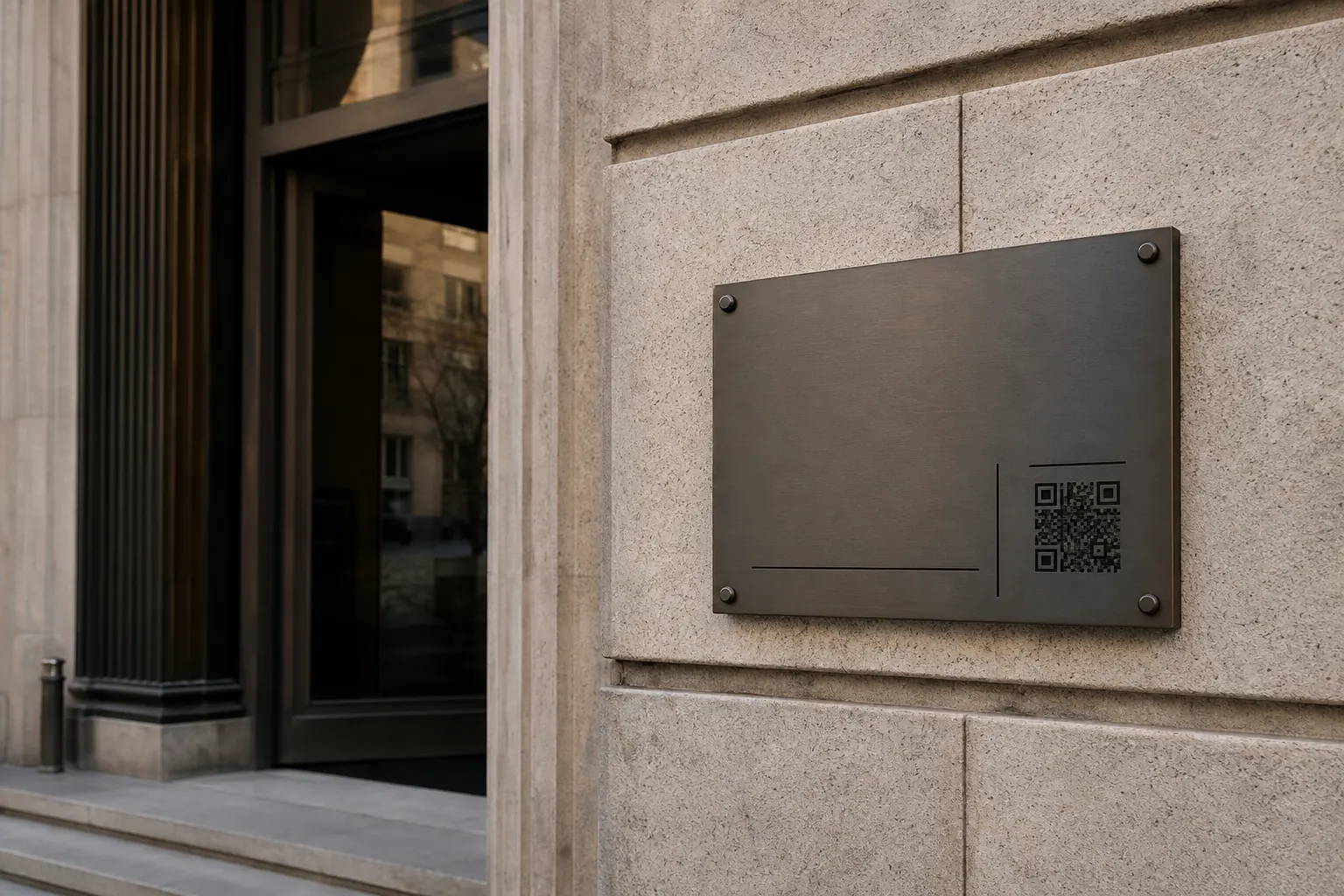
How does the system work?
After completion and required procedures, a building-specific BKS certificate is prepared and mounted at an accessible point on the facade. Public access and authorised access are not the same: what a citizen sees via QR may sit on a different layer from what the Ministry, inspection bodies or emergency teams can reach. That separation matters for both transparency and security.

- Location, parcel data and core identity information
- Building permit and occupancy permit
- Floor and independent unit information
- Contractor, site manager, inspection body and design authors
- Technical drawings, inspection and laboratory records
- Concrete / material tests and floor plans
- Later control and inspection records
The information a citizen sees via QR may not be the same as what the Ministry, inspection bodies or emergency teams can access.
Which buildings receive it?
BKS mainly applies to buildings inspected and completed under Law No. 4708 on Building Inspection. Not every older building in Türkiye automatically carries a BKS plate. It is more common on newer buildings whose inspection process was completed after the system began. Short judgements such as “no plate = unsafe” or “plate = perfect” are therefore misleading.
Does it mean inspection every five years?
According to Ministry statements, buildings that receive a Building Identity Certificate are expected to be checked by building inspection bodies in five-year periods after the plate is installed. The aim is to detect illegal floors, interventions to structural members, non-compliant changes and unauthorised works that affect safety. In other words, BKS is not a one-time label; it is a follow-up frame over time.
Having a BKS plate does not mean the building is perfectly sound today; it means the building is registered and trackable.
How does it help in earthquake and emergency response?
In disaster management, BKS aims to give response teams faster access to building data. With authorised access, teams can in principle reach floor plans, structural characteristics, unit layouts and other technical information needed for intervention more quickly. RFID becomes especially valuable when the facade is damaged, internet is limited, or a QR code cannot be read directly.
At Pera Villas., for completed projects under building inspection, we treat records, documentation and handover discipline with this same idea of traceability. Quality building means not only the right detail, but also the right record and long-term follow-up. In that frame, BKS is a visible institutional mark of good practice.